
Speech-to-tactile communication
Feel spoken language through touch.
RHEMA is developing a wearable platform that translates speech into structured tactile patterns, creating another way for Deaf and DeafBlind people to access spoken communication.
Non-invasive wearable approach
Designed for multilingual use
Edge processing direction
Prototype-tested in Chennai
How RHEMA works
A structured pathway from speech to touch.
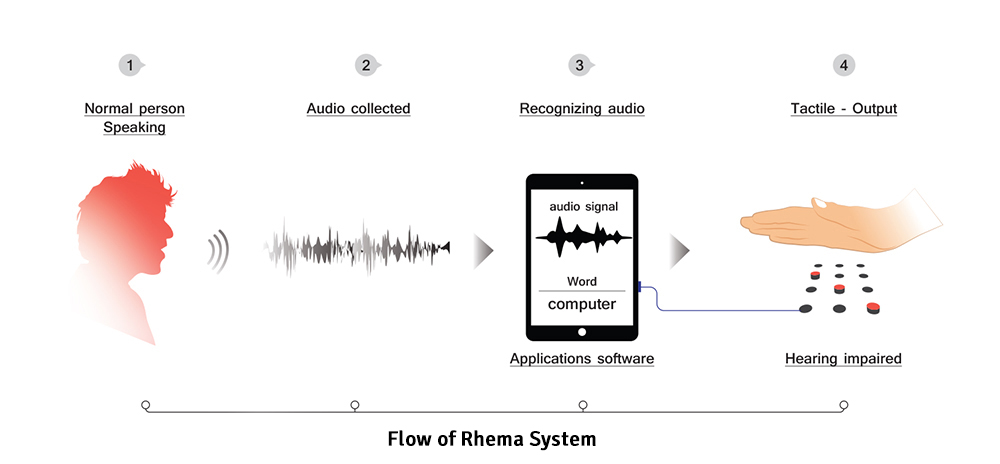
RHEMA does not simply reproduce sound as vibration. Its developing architecture processes spoken language and maps it to repeatable tactile patterns intended to be learned and recognised through touch.
Capture speech
Spoken language is captured through the system’s audio input.
Process language
Software recognises and segments speech for tactile translation.
Generate patterns
Language units are converted into structured tactile sequences.
Deliver through touch
A wearable device delivers the patterns for the user to learn and interpret.
The RHEMA platform
Communication technology designed around touch.
The platform combines speech processing, tactile-language software, controllers and wearable hardware. Development is focused on practical use across education, rehabilitation and everyday communication.
- Structured tactile-language architecture
- Wearable, non-invasive hardware direction
- Multilingual and offline-operation goals
- Modular platform for future assistive applications
Development in context
Shaped through work with students and educators.
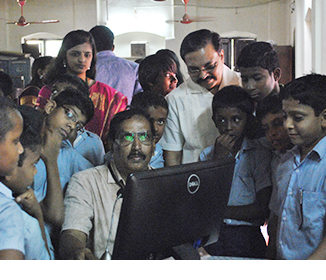
RHEMA’s prototypes have been demonstrated and evaluated in learning environments in Chennai, providing practical feedback on recognition, training and wearable use.
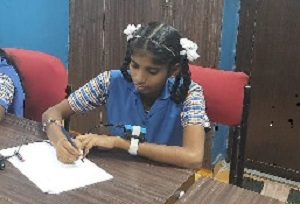
User training
Structured sessions explore how users learn and distinguish tactile patterns.
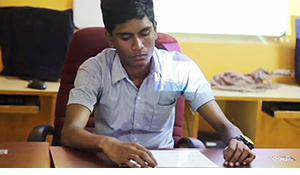
Prototype evaluation
Feedback from students and specialists informs hardware and learning-system refinement.
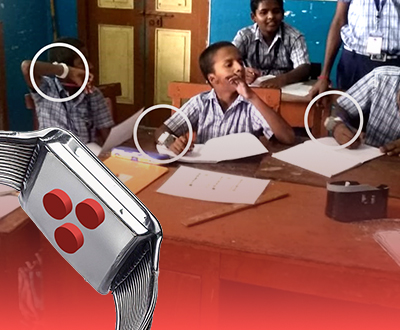
Learning environments
Classroom engagement keeps development connected to real communication needs.
RHEMA-KELLER
Extending tactile communication into environmental assistance.
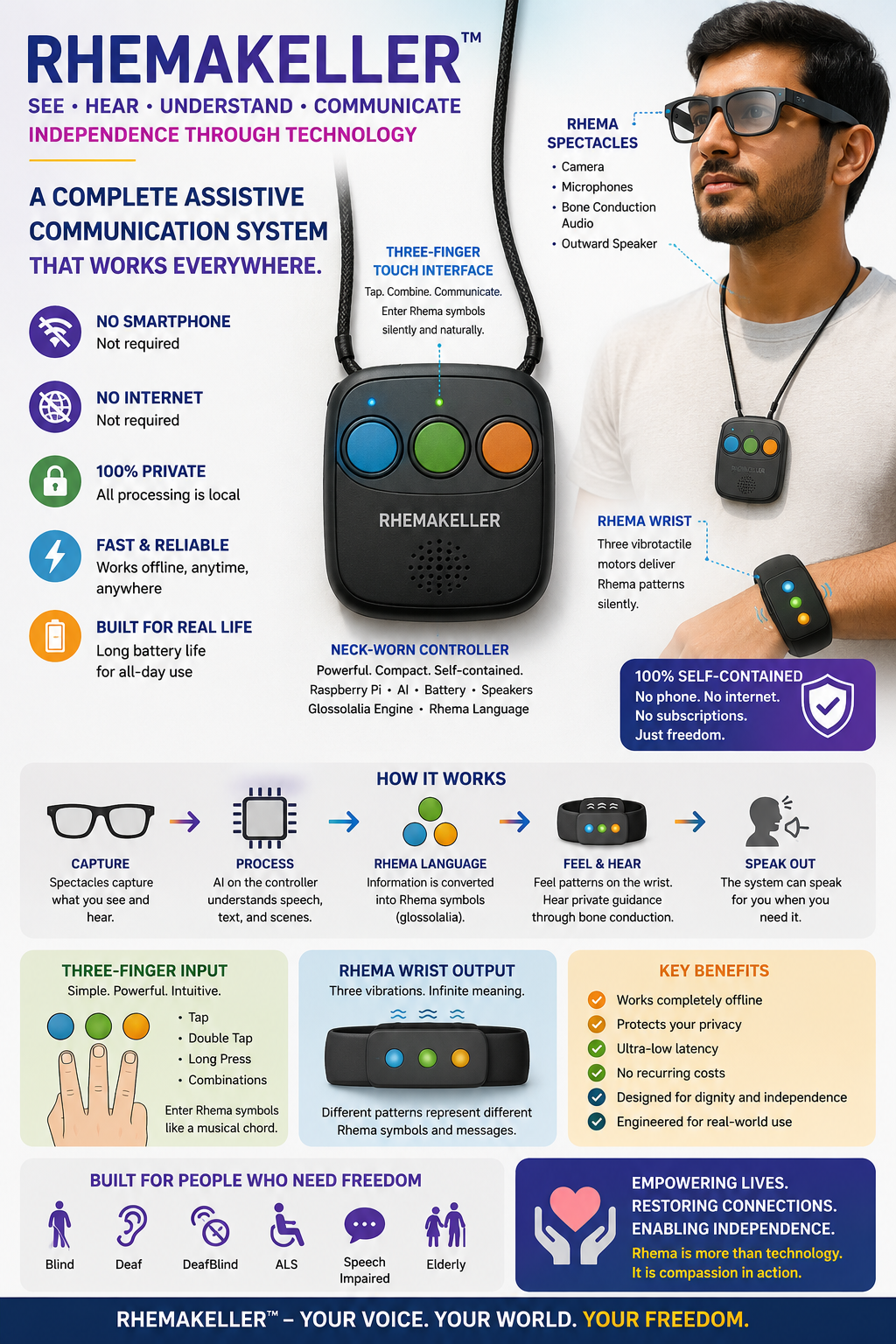
RHEMA-KELLER is a developing platform concept that combines tactile feedback with computer vision and edge AI. Its intended direction includes recognising people, objects and text, detecting obstacles and supporting navigation for Blind, visually impaired and DeafBlind users.
Concept image and planned capabilities shown. Features remain subject to engineering, testing and applicable approvals.
Explore RHEMA
Follow the work from evidence to application.
Research
Understand the scientific foundations, publications and field-development context behind tactile communication.
Applications
Explore intended use across accessibility, education, healthcare, mobility and workplace inclusion.
Demonstrations
See prototype demonstrations, classroom sessions and the development journey in context.
Help move tactile communication from prototype to wider access.
RHEMA welcomes conversations with schools, rehabilitation centres, researchers, technology partners and organisations supporting inclusive innovation.